


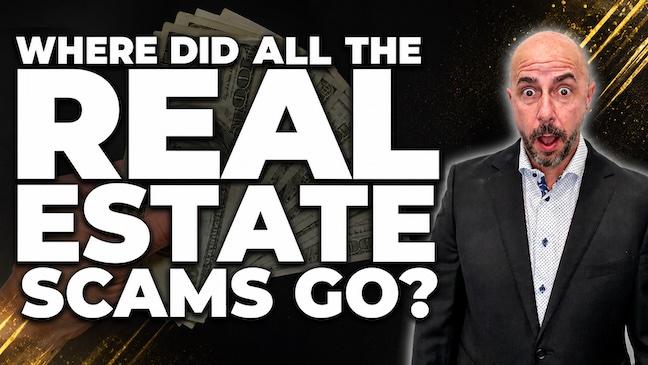
Where Did All the London Ontario Real Estate Scams Go?
The "I Buy Houses for Cash" signs have vanished from London telephone poles — but the predatory operators behind them haven't. Here's the truth about what happened, where they went, and how they're still targeting homeowners right now.
Why "We Buy Houses for Cash" Signs Disappeared From London Overnight
If you've driven around London, Ontario recently, you may have noticed something: the telephone poles that were once plastered with "I Buy Houses for Cash — Fast Closing!" signs are almost completely bare. For a while, those signs were everywhere — stapled to hydro poles, tucked under windshield wipers, shoved through mail slots. Then, almost overnight, they vanished.
So what happened? Did these operators clean up their act? Did a bylaw crack down? The reality is simpler — and more revealing about how these schemes actually worked.
The overwhelming majority of these "cash buyers" were not buyers at all. They were wholesalers — operators running contract assignment flips. They would lock a distressed or uninformed seller into a purchase agreement at a below-market price, then assign (sell) that contract to a third-party investor for a fee — often without the original seller ever knowing a middleman was involved or profiting. The seller got less. The "buyer" never bought anything. The wholesaler pocketed the spread.
This model works in exactly one condition: a rapidly rising market where property values move fast enough to make the assignment profitable for everyone downstream. When London's market shifted — inventory rose, demand softened, and prices flattened — the math stopped working. The quick profits evaporated. The signs came down.
But here is what you need to understand: the signs are gone. The operators are not.
"The signs came down because the market changed. The predatory mindset did not. These operators have simply gone quieter — and that makes them more dangerous, not less."
— Ryan Hodge & Sandra Tavares, The Realty Firm Inc.Assignment Sales, Fine Print, and Who Actually Profits
Let's break down exactly how these deals were structured — because understanding the mechanics is the best protection against them.
A wholesaler approaches a homeowner — often someone elderly, recently widowed, handling an estate, behind on bills, or simply overwhelmed — and makes a compelling pitch: "We'll buy your house as-is, no repairs, fast closing, cash in your hand." It sounds clean. It sounds fair. It is neither.
The purchase agreement the seller signs is deliberately crafted with an assignability clause buried in the fine print. This clause allows the "buyer" to transfer their position in the contract to any other party before closing — without the seller's explicit consent or knowledge of the terms. The wholesaler then markets the property to investors at a higher price, collects the spread as a fee, and walks away. The seller received a below-market offer. The final "buyer" may be an investor with their own agenda. And the person in the middle made money without ever owning the property for a single day.
Seller is approached — often off-market — with a fast, below-market cash offer dressed up as convenience and speed.
The agreement contains an assignment clause giving the "buyer" the right to sell their position in the contract to a third party without the seller's knowledge.
The wholesaler markets the property at a higher price to investors, pockets the spread, and never actually purchases the home.
The original homeowner received less than fair market value — often tens of thousands less — and had no idea a middleman profited from their equity.
And what happens when the deal collapses? When the wholesaler can't find an end buyer — a common occurrence in a flat or declining market — the seller is left stranded. The closing doesn't happen. Timelines blow up. In some cases, the seller has already made commitments based on the expected sale — signed a lease elsewhere, arranged a move, made financial decisions. Recovering damages from a cash buyer who breaches a contract is notoriously difficult. Many of these operators structure their businesses to be effectively judgment-proof.
Seniors, Estate Sales, and Distressed Sellers: The Quiet Targets
Without the telephone pole signs and the mass-market spray approach, these operators have become more surgical. They are now quietly targeting the most vulnerable segment of the seller population — those least likely to have strong professional representation and most likely to prioritize speed and simplicity over value.
That means seniors living alone. Families navigating the stress of an estate sale after a loss. Homeowners behind on property taxes or dealing with a relationship breakdown. People who don't know what their home is worth, who haven't spoken to a realtor, and who are approached directly — sometimes at their door, sometimes by phone or mail — with an offer that feels like a solution to an overwhelming problem.
These sellers are not unsophisticated. They are simply in circumstances that make them vulnerable to a well-rehearsed pitch from someone whose entire business model depends on information asymmetry. The operator knows what the home is worth. The seller often doesn't. That gap is the profit margin.
- They approach you unsolicited — by door knock, phone call, or direct mail — before you've listed
- They make an offer with no property visit, no inspection, and no formal appraisal
- The offer is presented as time-limited: "This price is only available for the next 48 hours"
- The agreement contains language allowing them to "assign" or "transfer" the contract
- They discourage you from consulting a lawyer or realtor before signing
- The "company" has no verifiable office address, reviews, or local presence
- Closing is conditional on financing that is never clearly explained
The single most effective protection? Before signing anything from an unsolicited buyer, call a licensed real estate professional and ask for a current market valuation. In most cases, that conversation alone will reveal the gap between what you're being offered and what your home is actually worth on the open market.
How Door-to-Door Energy Companies Are Quietly Destroying Home Sales
Separate from the cash buyer problem — but equally dangerous — is a predatory scheme that has been quietly spreading through London and surrounding Ontario communities for years: door-to-door HVAC rental contracts.
The pitch is familiar. A salesperson knocks on your door — sometimes impersonating a utility company representative, sometimes presenting as a "home energy advisor" — and offers to replace or service your furnace, air conditioner, or water heater. The equipment is presented as a "rental" or "protection plan." The monthly cost sounds modest. You sign. The nightmare begins.
What most homeowners don't realize when they sign is that these contracts are often 10 to 15 years in length, registered on title to the property, and come with buyout penalties that can reach into the tens of thousands of dollars. We have seen discharge penalties exceeding $15,000 to $25,000 on a single HVAC unit. In some cases, multiple units have been enrolled — a furnace, an air conditioner, a hot water heater — and the total encumbrance on the property can easily surpass $40,000 to $50,000.
When that homeowner decides to sell, the contract doesn't disappear. It surfaces during the real estate transaction — attached to the home, not the person — and the seller is faced with a brutal choice: pay the full buyout penalty to clear title, pass the contract to the buyer (which most informed buyers will refuse or demand a price reduction for), or watch the deal collapse entirely.
Most predatory HVAC rental contracts run 10–15 years. Many homeowners don't realize the full duration until they try to sell.
Early termination fees can reach $15,000–$25,000 per unit. Multiple units can create a combined encumbrance exceeding $40,000–$50,000.
These contracts are often registered on title — meaning they follow the home, not the owner, and must be resolved before a clean sale can close.
Buyers discovering these contracts at closing can demand price reductions equal to the full penalty, or walk away from the deal entirely.
Your Rights, Your Questions, and How Ontario Law Has Your Back
Ontario's consumer protection framework does provide meaningful rights — but only if you know they exist and act on them within the required timeframes.
Under the Consumer Protection Act, door-to-door contracts signed at your home come with a 10-day cooling off period during which you can cancel without penalty. This applies to many energy contracts. The challenge is that many consumers don't know this, and companies don't prominently advertise it. If you or someone you know has recently signed an HVAC rental contract and is having second thoughts, the clock may still be running. Act immediately.
Before you sign anything — a purchase agreement with an unsolicited buyer, an energy service contract at your door, or any agreement that involves your home — ask these questions:
- Is this contract assignable to another party? If yes — why, and without my consent?
- What is the total cost of this agreement over its full term?
- What is the early termination or buyout penalty — at year one, year five, year ten?
- Will this contract be registered on title to my property?
- What happens to this contract if I sell my home before the term ends?
- Can I have 48 hours to review this with a lawyer before signing?
- Are you a licensed real estate salesperson or broker registered with RECO?
If anyone — a buyer, a salesperson, a contractor — resists any of these questions or pressures you to sign on the spot, that resistance is itself the answer. Walk away. Call us. Get a second opinion from a professional who has a fiduciary obligation to protect your interests — not their commission.
What Every London, Ontario Homeowner Needs to Know
The signs are gone — the operators aren't. "We Buy Houses for Cash" wholesalers have abandoned mass marketing but are now quietly targeting seniors, estate sales, and distressed sellers directly.
Assignment clauses cost sellers equity. Buried contract language allows wholesalers to flip agreements to third-party investors without the seller's knowledge — pocketing the spread at the original seller's expense.
Deal collapse risk is real and hard to recover from. When wholesalers can't find end buyers, closings fall apart — and suing a cash buyer for breach of contract is difficult and rarely successful.
HVAC rental contracts can derail your home sale. Long-term door-to-door energy contracts registered on title carry buyout penalties of $15K–$50K+ and can kill deals at the worst possible moment.
You have rights — but you need to act fast. Ontario's Consumer Protection Act provides a 10-day cooling off period on many door-to-door contracts. If you've recently signed, don't wait.
The best protection is a second opinion before you sign anything. A licensed realtor, a real estate lawyer, or a quick market valuation can reveal exactly how much you're giving up — before it's too late.
Trusted London, Ontario Real Estate Advice
Have Questions About a Buyer, Contract, or Your Home's Value? We're Here.
Visit Us Online at www.ryanandsandra.caThe Realty Firm Inc. Brokerage · 734 Wellington Street, London, Ontario N6A 3S2
519-601-1160 · ryan@therealtyfirm.ca · www.ryanandsandra.ca